



Olive Wood Resin: Avoid Mixed Finishes
Olive wood resin tables are known for their natural elegance—where organic wood grain meets flowing epoxy resin to create a sculptural, functional piece of art.
During customization, one common question often comes up:
“Can we use a matte finish on the wood and a gloss finish on the resin?”
At first, this idea seems appealing. The contrast between matte and gloss may sound visually dynamic and modern. However, in real-world design and craftsmanship, especially for olive wood resin tables, mixing surface finishes often leads to unintended visual and functional issues.
Here’s a deeper look at why experienced makers avoid combining matte and glossy finishes on the same tabletop.

1. Olive Wood Is Naturally Designed to Reflect Light
Olive wood is not a flat or uniform material. It is one of the most expressive hardwoods, characterized by:
- Strong natural grain movement
- High contrast color variation
- Dense, reflective wood structure
- Organic, flowing patterns
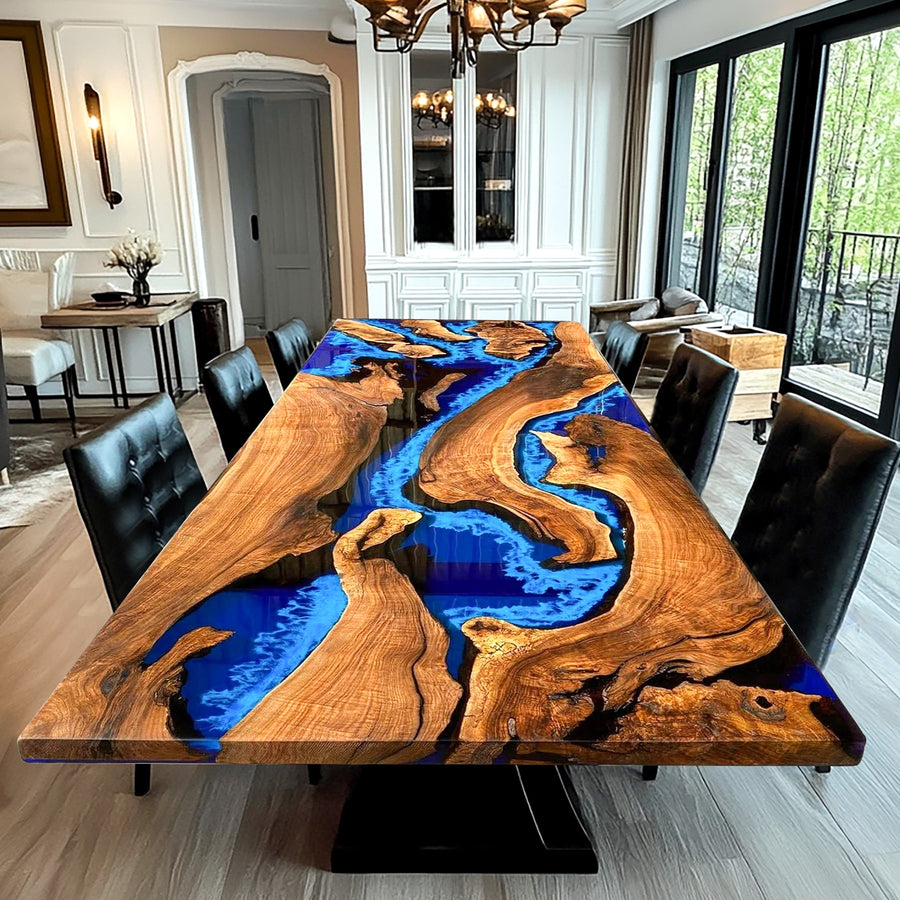
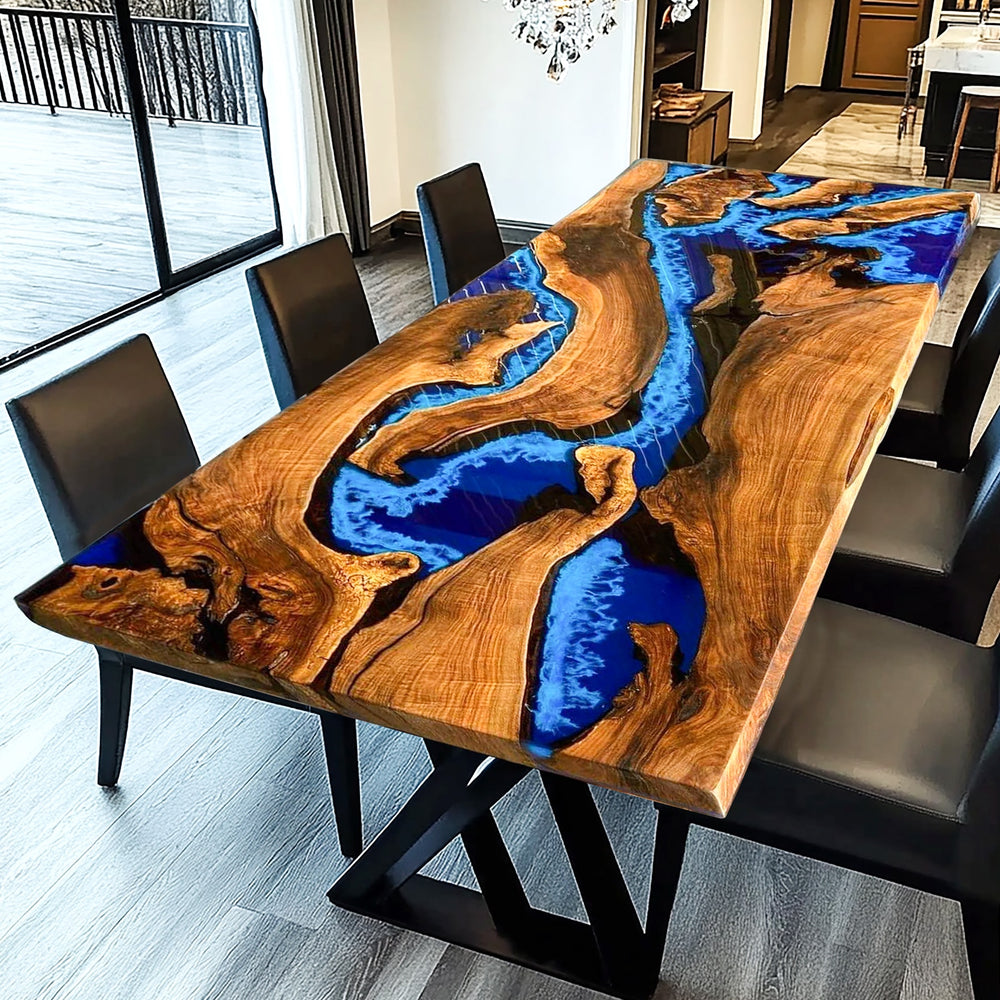
When polished properly, olive wood naturally interacts with light. A fully matte finish actually reduces this depth and makes the surface appear more “dry” and visually flat.
In many cases, olive wood performs best with a full gloss finish, which enhances its natural character instead of suppressing it.
2. Resin Is a Visual “Flow Element,” Not Just a Fill
Epoxy resin in river tables is not just a structural component—it is a visual storytelling material.
High-gloss resin:
- Reflects light like water
- Creates depth and optical illusion
- Enhances the “river flow” effect
- Adds luxury and clarity to the design
Because resin is inherently glossy in high-end furniture design, it plays a different visual role than wood.
When resin is glossy but wood is matte, the resin becomes visually isolated, breaking the illusion of a continuous natural landscape.
3. Mixed Finishes Disrupt Visual Unity
One of the core principles of high-end resin table design is surface continuity.
When matte wood is placed next to glossy resin:
- The eye immediately detects a boundary shift
- The table surface feels segmented
- The “flow” between wood and resin is interrupted
- The design loses its natural harmony
Instead of feeling like one integrated piece, the table starts to look like two different materials artificially combined.
For premium handcrafted furniture, this visual separation reduces perceived craftsmanship quality.
4. Different Finishes Age Differently Over Time
Another important factor is long-term durability and appearance.
Matte wood surfaces tend to:
- Absorb oils and fingerprints more easily
- Develop uneven patches over time
- Require more careful maintenance
Gloss resin surfaces tend to:
- Maintain shine longer
- Show scratches under directional light
- Require polishing for clarity restoration
When combined, these differences create uneven aging across a single tabletop, leading to visual imbalance after months or years of use.
5. Maintenance Becomes Confusing for Owners
Mixed finishes also introduce practical challenges in daily care:
- Matte wood cannot be polished like glossy surfaces
- Gloss resin benefits from polishing to maintain clarity
- Cleaning methods differ for each surface type
This often leads to accidental damage, such as over-polishing matte areas or under-maintaining resin sections.
A unified finish simplifies care and ensures the table ages evenly.
6. The Better Approach: Unified Surface Design
For olive wood resin tables, professional craftsmen typically recommend the following approach:
✔ Full gloss finish for luxury statement pieces
This maximizes visual impact and material continuity.
The key principle is simple:
The table should feel like one continuous design—not two competing materials.

Olive wood and resin are already a powerful combination of nature and craftsmanship. Their beauty lies in contrast—but that contrast should remain unified through a consistent surface language.
While mixing matte and gloss finishes may seem like a creative idea, in practice it often disrupts visual harmony, light consistency, and the long-term aesthetic balance of the table.
For olive wood resin tables, a unified finish approach is almost always the more refined choice.
However, it’s worth noting that not all woods behave the same way.
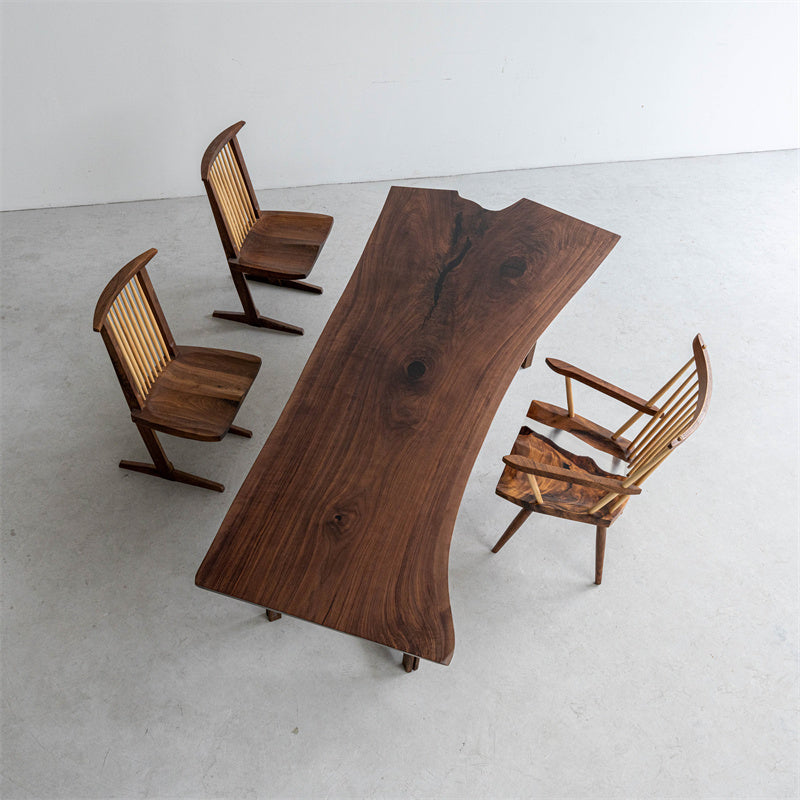
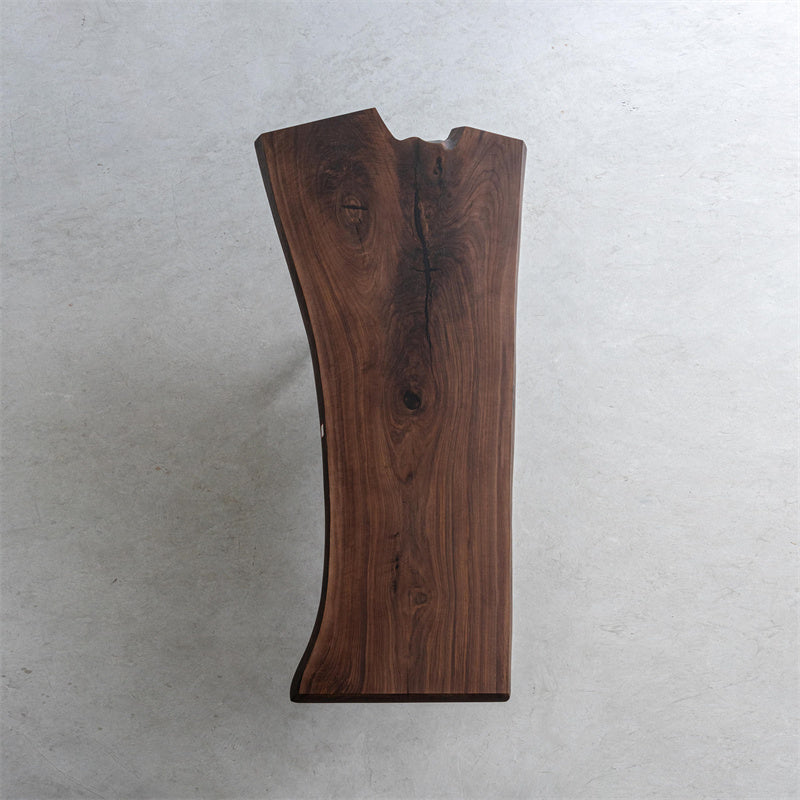
Walnut and black walnut wood, for example, are more forgiving and better suited for experimenting with different surface finishes. Their grain structure is more stable and uniform, which allows designers to use subtle variations—such as matte wood with gloss resin—without breaking visual harmony.
In contrast, olive wood is highly expressive and naturally complex, which means it performs best when the surface finish remains consistent and cohesive across both wood and resin.
Ultimately, the goal is not contrast for its own sake, but balance—where material, finish, and light all work together as one unified design.